THE NAPPY PROJECT
  • Home
  • How to
    • Choose a nappy style
    • Get started
    • Get the right fit
    • Clean and maintain
    • Troubleshoot issues
  • Resources
    • Glossary
    • FAQs
    • Useful links
    • Pre-loved nappies
  • Workshops
    • Ongoing support
  • About
    • Nappy packs
    • Contact

Getting the right fit

Picture
You will find that the shape and fit of the nappy will vary between brands, and it is a good idea to try a few different brands to find the right fit for your baby. 

Nappies come in fixed sizes and adjustable sizes. In the long term you will get more use out of adjustable nappies as they can be adjusted from newborn to toddler stages. Fixed size nappies are a good alternative for particularly small babies or if you are feeling overwhelmed by the idea of adjusting each nappy. 
​

Sizing

​Each brand may offer their own recommendation for the best fit of your baby. You can choose a fixed-size nappy or an adjustable nappy, such as a one size fits all (OSFA) or one size fits most (OSFM).   

Every child is different and the guide below might not suit every baby, however it is a good start. 

​ 
Picture
Sized nappies - newborn

Weight range: approximately 1.5 to 8kg

Age range: approximately 0-3 months 

​Generally a fixed size, not adjustable
Picture
Sized nappies - babies and toddlers

Small: for babies approximately 4 to 7kg

Medium: for babies and toddlers approximately 6 to 11kg

Large: for babies and toddlers approximately ​9 to 16kg

​Generally a fixed size, not adjustable
Picture
Adjustable nappies - one size fits all (OSFA) and one size fits most (OSFM)

Weight range: Adjustable for approximately 3.5 to 16+kg

Age range: approximately 3 months old to toilet training

How to adjust a one-size or adjustable cloth nappy

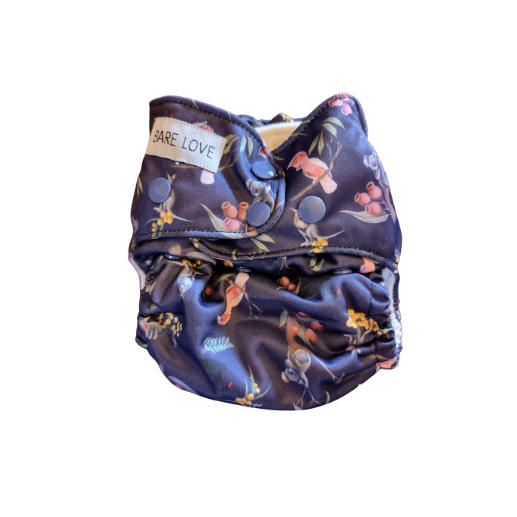
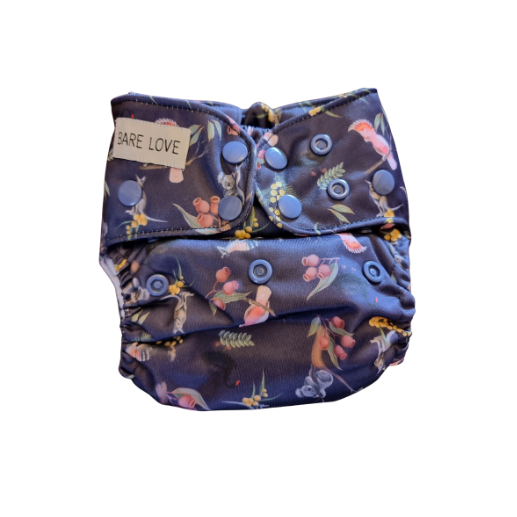
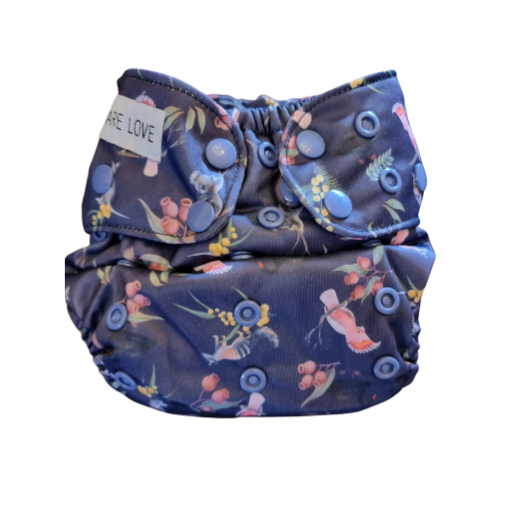
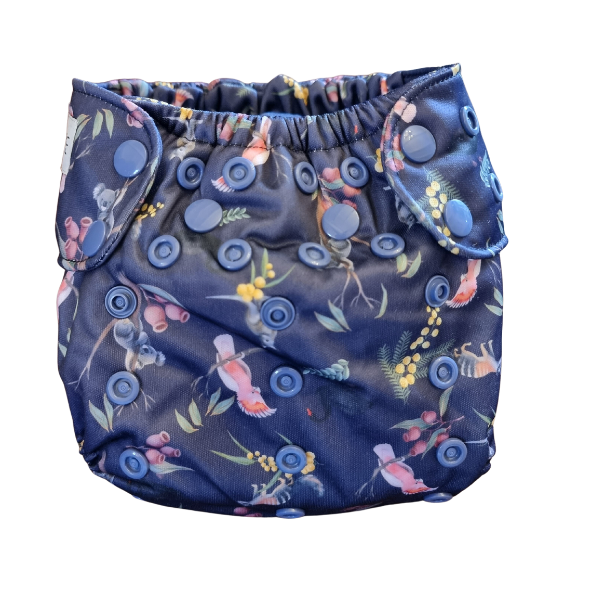
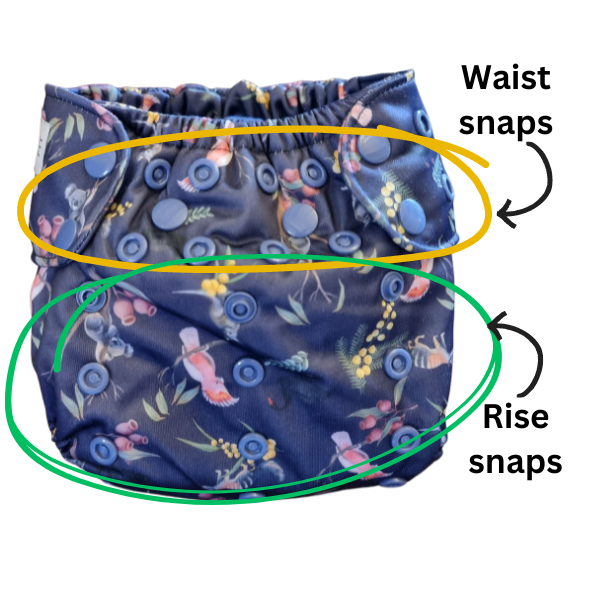
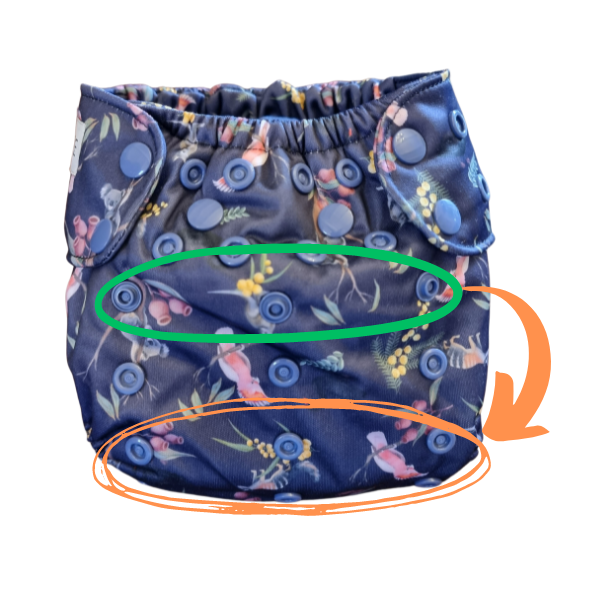
Use the rise snaps to create four different sizes.
Picture
Newborn
Picture
Small
Picture
Medium
Picture
Large
The top row of rise snaps can snap into any of the lower rows. Fold down the top row to teh right height for your baby. As a general rule, it will be bottom row for newborn, adn as your baby grows you will use the higher rows. By toddler age you wont need to snap the nappy down at all. 
Picture
Picture
The waist snaps should be brought in so that the nappy is secure but not tight around baby's waist. 
​

Fitting steps

Picture
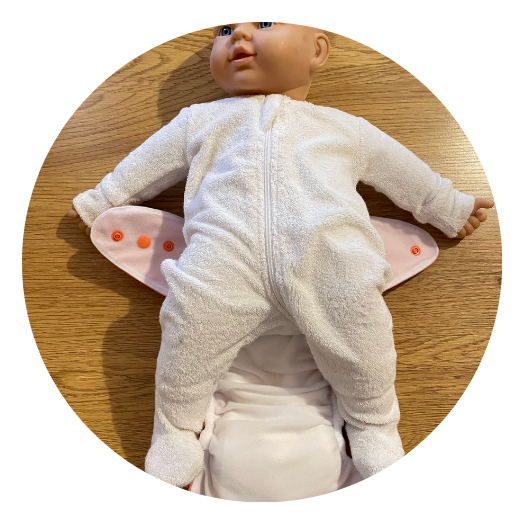
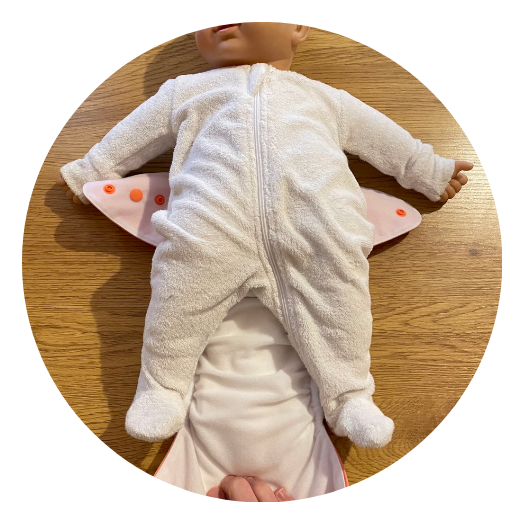
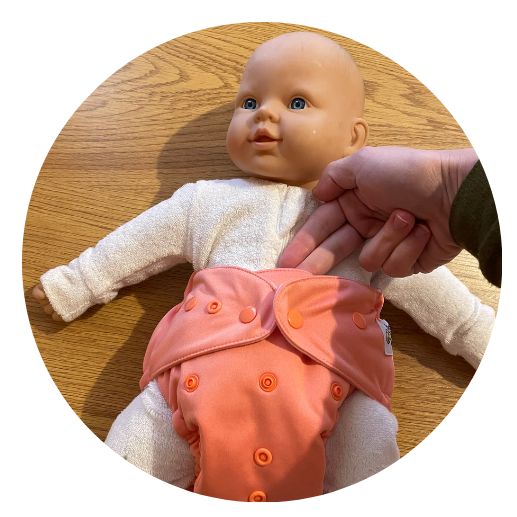
1. ​start by laying the assembled nappy under baby and the waist sits under the belly button.
Picture
2. ​pull down the front of the nappy firmly.
Picture
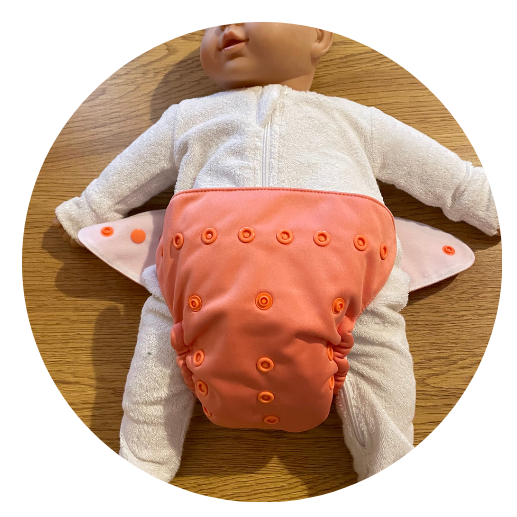
3. ​bring it up and over the baby.
Picture
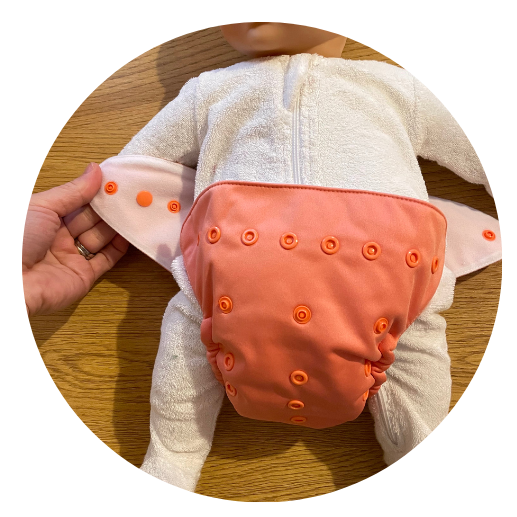
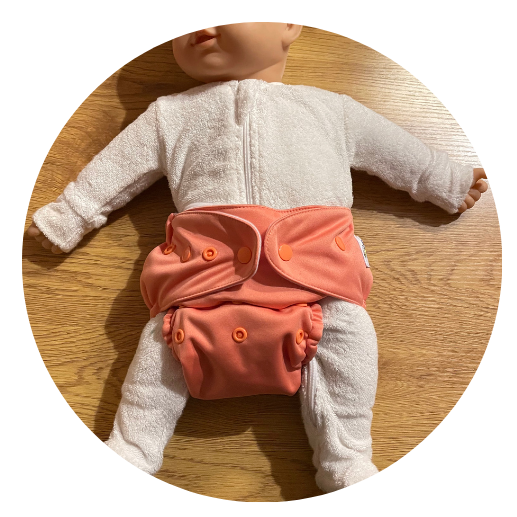
4. pull out each side/wing of the nappy
Picture
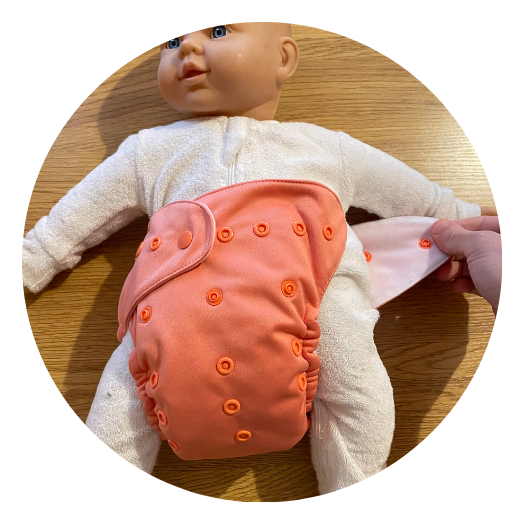
5. bring it across the baby and snap to secure
Picture
6. ​check that the nappy is firm but not too tight around the tummy
Picture
7. reduce the size if necessary by snapping the rise snaps down to the appropriate row 
Picture
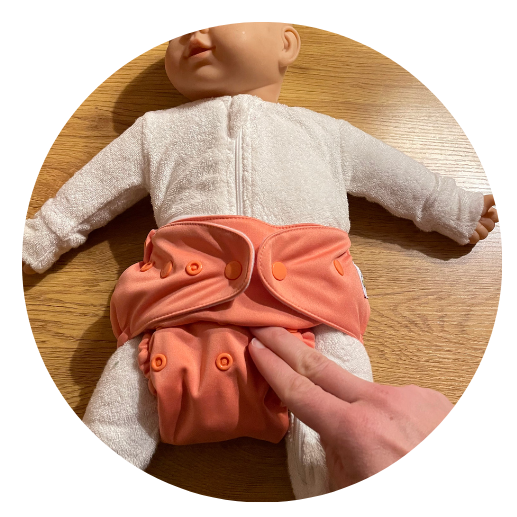
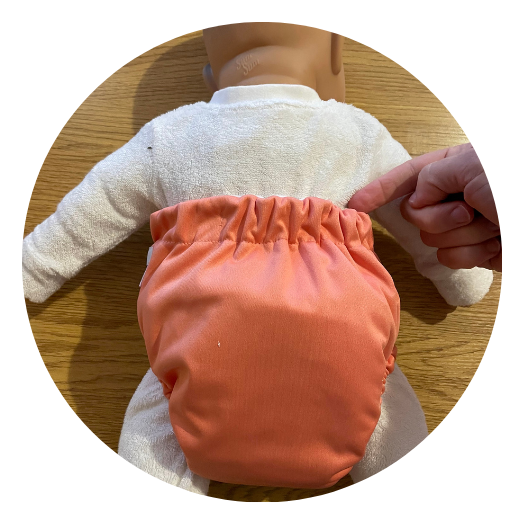
8. ​tuck in any extra nappy cover
Picture
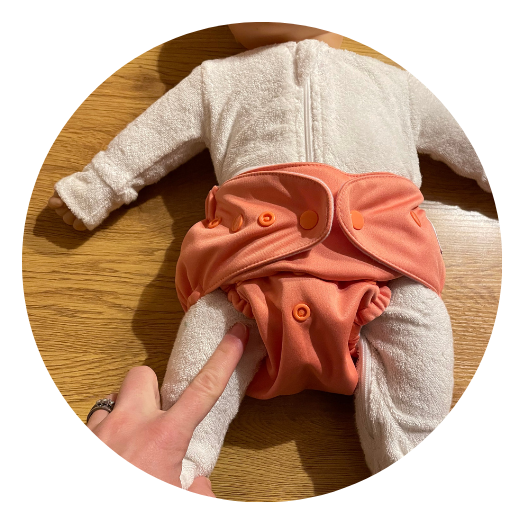
9. push the elastics to the top of the legs to sit in the crease of the leg
Picture
10. ​check around the waist, back and legs and tuck in any extra material or inserts into the cover to prevent leaks.

Adjusting the snap rises

Picture
Sustainability Victoria logo
This project is supported by the Circular Economy Councils Fund. The Fund is delivered by Sustainability Victoria under the Victorian Government’s circular economy policy, Recycling Victoria: a new economy. 
Bayside City Council logo
Monash logo
Boroondara logo
Moonee Valley logo
Brimbank logo
Nillumbik logo
Glen Eira logo
Stonnington
Knox logo
Yarrah City logo
Maribyrnong logo
Yarra Ranges logo
Maroondah logo
Whitehorse Council logo
(c) 2023
  • Home
  • How to
    • Choose a nappy style
    • Get started
    • Get the right fit
    • Clean and maintain
    • Troubleshoot issues
  • Resources
    • Glossary
    • FAQs
    • Useful links
    • Pre-loved nappies
  • Workshops
    • Ongoing support
  • About
    • Nappy packs
    • Contact